

Different venues, different experiences
Angel Stadium and Honda Center give Anaheim distinct settings for shared events. The Angels identify Anaheim as their ballpark home since 1966. Honda Center identifies the Anaheim Ducks as its main tenant and records its own opening in 1993. These are different venues, not interchangeable names for a single destination. Check which one is printed on your event information before choosing a route or arranging a meeting.
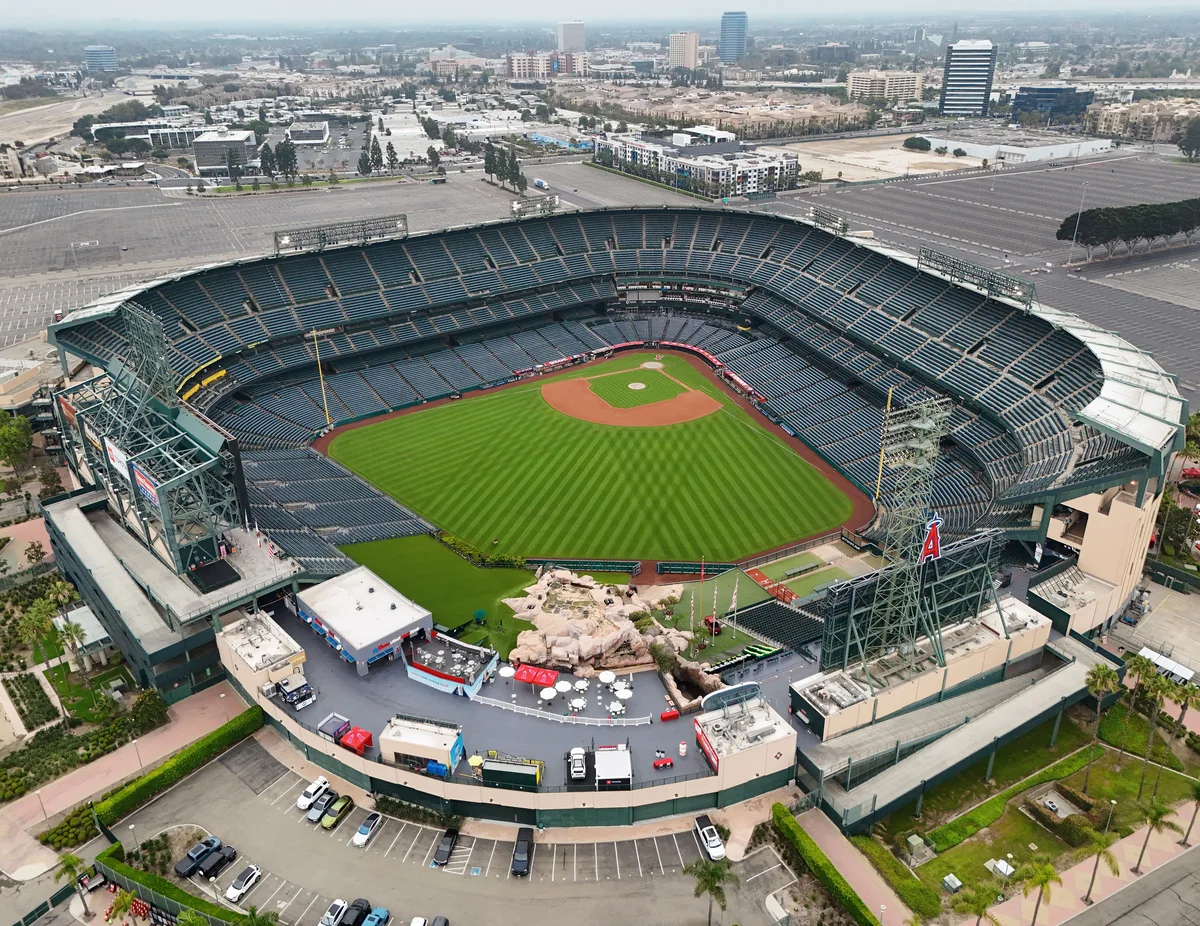
The aerial photograph shows Angel Stadium, not Honda Center. It makes the ballpark’s open playing field and surrounding seating easy to read. A view from above gives a sense of the building’s arrangement without pretending to describe the view from a particular seat. For seating decisions, use the venue’s own map and the details supplied with the event.
There is a useful contrast between a ballpark and an arena even before considering a particular performance. Think about the experience you want: watching a game unfold across a field, following action on an indoor surface, or gathering for a concert. The right preparation begins with the actual event, rather than with a general idea of a night out in Anaheim.
Read the venue before the visit
Honda Center’s official account identifies the City of Anaheim as the building owner and Anaheim Arena Management as its management organization. It also lists a Barry Manilow concert as the first event, held on June 19, 1993. The arena’s story therefore reaches beyond its hockey identity. Its event calendar should be consulted directly for current uses; a historical list is not a schedule.
The Angels provide separate transportation information for driving and parking, rideshare and tailgating. Those categories are a reminder to plan the journey as well as the event. If several people are arriving independently, agree on a recognizable meeting point and a way to communicate changes. Check the current venue instructions for permitted belongings before packing, and leave time to follow the actual arrival arrangements.
Avoid building a plan around a remembered entrance or an old screenshot. Ticket details, operator guidance and current transportation information deserve more weight than an undated recommendation. This article is local context, not a ticket service or a statement of either venue’s rules. Neither organization sponsors or endorses the insurance information here.
A practical auto-insurance question
An outing also offers an ordinary reason to check the difference between liability protection and coverage for your own vehicle. The California Department of Insurance distinguishes liability, collision and comprehensive coverage. They address different kinds of loss; the phrase “car insurance” alone does not tell you which protections you bought.
Before a trip, review your declarations and ask which deductible and optional coverages apply to the car you will use. If someone else will drive, ask how the contract treats that arrangement. Keep the conversation about your actual policy, not assumptions about a stadium parking area. No venue’s popularity establishes a driver’s risk or guarantees payment for damage. The issued policy and endorsements control. A clear explanation now is more useful than discovering after an incident that two similarly priced proposals contained different protections.